




 Sep 05, 2025
 View:2434
Types of bottle filling machines
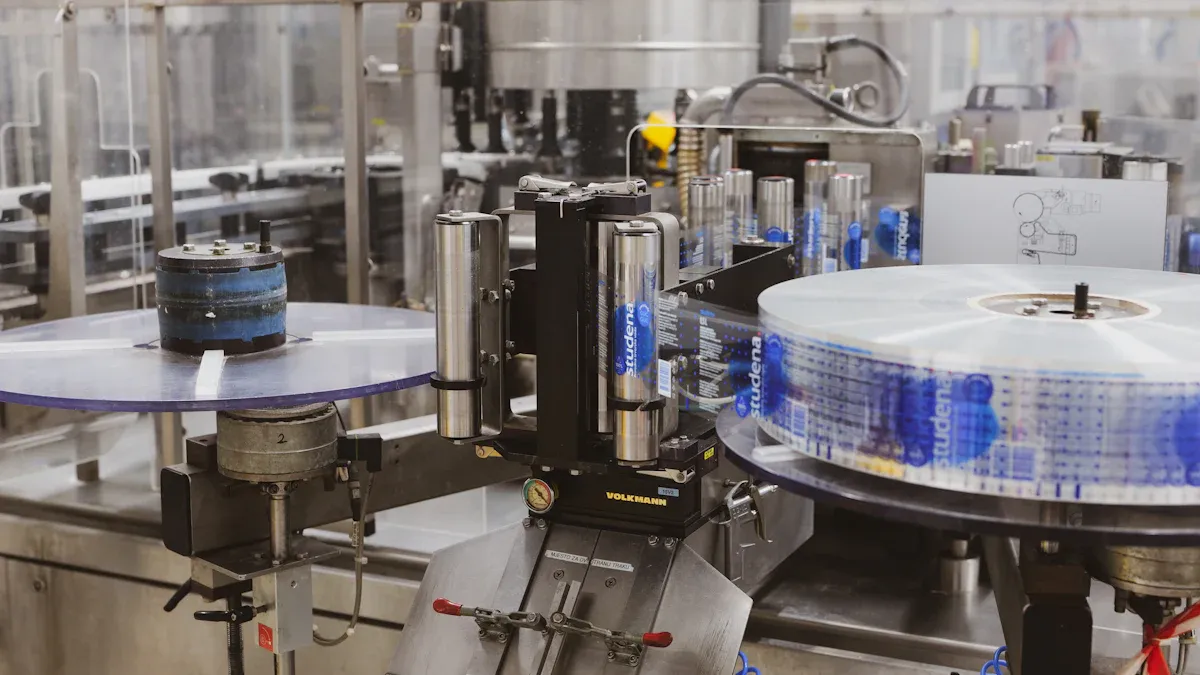
Image Source: pexels
You will find many types of bottle filling machines in the packaging industry. Piston fillers work well with thick liquids like sauces. Gravity fillers use gravity to fill bottles with thin liquids, such as water or juice. Pump fillers can handle both thin and thick products, including chemicals and cosmetics. Overflow fillers make sure every bottle reaches the same fill level, which is great for clear drinks. Net weight fillers fill bottles by weight for precise results. The global market serves many bottle types, such as PET and glass, and aseptic filling machines alone account for 35% of market revenue. You can sort machines by how they work, their automation level, or their filling method.
Key Takeaways
Choose the right filling machine based on your product's viscosity. Gravity fillers suit thin liquids, while piston fillers work best for thick products.
Consider automation levels when selecting a machine. Manual machines are cost-effective for small operations, while fully automatic machines boost speed and efficiency for large-scale production.
Understand the filling methods available. Net weight fillers provide high accuracy, while overflow fillers ensure uniform fill levels for aesthetic products.
Evaluate your production speed and budget. Higher automation typically requires a larger investment but can save time and reduce labor costs.
Consult industry experts for tailored advice. They can help you navigate complex choices and recommend the best machines for your specific needs.
Types of Bottle Filling Machines
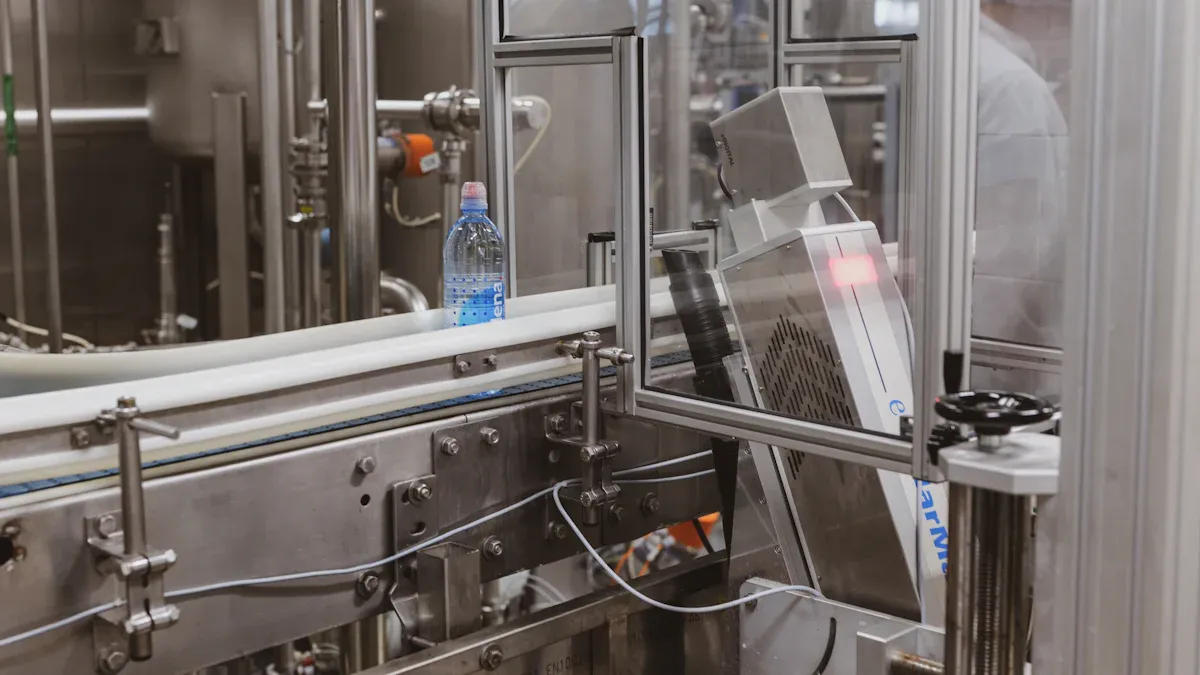
When you explore the types of bottle filling machines, you will notice that each one uses a different method to fill bottles. The table below gives you a quick overview of how each type works:
| Filler Type | Core Mechanism |
|---|---|
| Gravity Fillers | Use gravity to fill containers, best for free-flowing liquids, powders, and granules. |
| Overflow Fillers | Fill bottles until the liquid overflows, making sure every bottle has the same fill level. |
| Piston Fillers | Use a plunger to push product into bottles, great for thick and foamy products. |
| Pump Fillers | Use pumps to move product, work well with many viscosities. |
| Net Weight Fillers | Use scales to measure product weight during filling, often used for large containers. |
| Vacuum Fillers | Create a vacuum to pull product into bottles, perfect for high-accuracy filling. |
Gravity Fillers
Gravity fillers use the force of gravity to move liquid from a tank into bottles. You will find these machines most useful for thin, free-flowing liquids. They work best with products like water, juice, vinegar, and cleaning solutions. Gravity fillers also handle non-carbonated drinks and some specialty chemicals.
| Product Type | Examples |
|---|---|
| Low-Viscosity Liquids | Water, juices, solvents, alcohol, cleaning solutions, broth |
| Non-Carbonated Liquids | Flat water, tea, juice, detergents, shampoos |
| Specialty Chemicals | Lab reagents, alcohol-based solutions, antiseptics |
You should choose gravity fillers if you need a simple, cost-effective solution for filling bottles with thin liquids. These machines do not work well with thick or chunky products.
Overflow Fillers
Overflow fillers fill each bottle to the same level, even if the bottles have slight size differences. This feature makes them ideal for products where appearance matters, such as clear beverages or personal care items. You can use overflow fillers for both thin and medium-viscosity liquids.
Tip: Overflow fillers are perfect if you want every bottle on the shelf to look exactly the same.
Advantages:
Fill small bottles easily.
Handle thin and medium viscosity liquids.
Easy to clean and maintain.
Cost-effective for many products.
Work well with foamy products.
Limitations:
Not suitable for very thick products.
Not ideal for large containers.
May need adjustments for different bottle sizes.
You will often see overflow fillers in beverage, cosmetic, and cleaning product lines.
Piston Fillers
Piston fillers use a plunger to draw product into a cylinder and then push it into the bottle. This design makes them excellent for thick, sticky, or foamy products. You can use piston fillers for sauces, creams, gels, and even automotive oils.
| Industry | Product Viscosity Examples |
|---|---|
| Food and Beverage | Sauces, condiments, beverages |
| Pharmaceuticals | Liquid medications |
| Cosmetics | Lotions, creams, gels |
| Automotive | Oils, coolants |
| Chemical | Cleaners, solvents |
If you need to fill bottles with products that do not flow easily, piston fillers give you the control and power you need.
Pump Fillers
Pump fillers use different types of pumps, such as gear, lobe, or peristaltic pumps, to move product into bottles. You can fill both thin and thick products, including those with small particles. Pump fillers work well for shampoos, lotions, and even chunky sauces.
Pump fillers handle a wide range of product consistencies.
You can use them for liquids, gels, and products with particulates.
Piston pumps are best for very thick products.
Pump fillers give you flexibility if your production line needs to handle many types of products.
Vacuum Fillers
Vacuum fillers create a vacuum inside the bottle, which pulls the product in. This method gives you very accurate fill levels and reduces waste. You will find vacuum fillers useful for products that foam or drip, such as perfumes or specialty chemicals.
| Benefit | Description |
|---|---|
| Speed | Vacuum fillers fill bottles quickly and evenly. |
| Product Waste Reduction | They reduce foaming and dripping, keeping your workspace clean and saving product. |
Vacuum fillers help you maintain quality and speed, especially when you need to avoid spills or product loss.
Net Weight Fillers
Net weight fillers use scales to measure the exact amount of product in each bottle. This method ensures every bottle meets strict weight standards. You will often see net weight fillers in food, pharmaceutical, and chemical industries.
Net weight fillers use real weight measurements for unmatched accuracy.
They help you meet regulatory standards and keep customers happy.
You can use them for products with different viscosities and densities.
If you need to avoid overfilling and maximize profits, net weight fillers are a smart choice.
When you compare the types of bottle filling machines, think about your product’s thickness, the look you want, and how precise you need to be. Each machine offers unique benefits for different industries and products.
Automation Levels
When you choose between the types of bottle filling machines, you need to think about automation. Automation changes how fast you can fill bottles, how many workers you need, and how much you spend on equipment. Machines come in three main automation levels: manual, semi-automatic, and fully automatic.
Manual
Manual bottle filling machines need you to do most of the work. You place the bottles, control the filling, and remove the bottles by hand. These machines work best for small businesses, startups, or when you make specialty products in low volumes. You can use them if you do not need to fill many bottles each day.
Manual machines are best for low to moderate production.
They fit small-scale operations or businesses with unique products.
You may notice that manual filling takes more time and effort.
Sometimes, you see small differences in how much product goes into each bottle.
| Type of Machine | Startup Cost |
|---|---|
| Manual | $3k--$8k |
Note: Manual machines cost less at first, but they need more labor and can slow down your production.
Semi-Automatic
Semi-automatic machines help you fill bottles faster. You still load and unload bottles, but the machine controls the filling. These machines are easy to use, cost less than fully automatic ones, and fit well in small or medium businesses.
| Advantage | Description |
|---|---|
| Easy to operate | Simple controls, quick to learn |
| Cost-effective | Lower price, good for small and medium businesses |
| Compact design | Fits in small spaces |
| High precision | Accurate filling, less waste |
| Convenient maintenance | Easy to clean and fix |
You can use semi-automatic machines for many types of liquids and bottles.
They let you switch between products quickly.
You save time and keep your product quality high.
| Type of Machine | Startup Cost |
|---|---|
| Semi-Automatic | $15k--$30k |
Fully Automatic
Fully automatic bottle filling machines do almost everything for you. You load bottles in bulk, and the machine fills, caps, and sometimes even labels them. These machines work best for large factories or companies that need to fill thousands of bottles every hour.
Fully automatic machines fill bottles quickly and accurately.
They keep your production running without stopping.
You need fewer workers, which saves money on labor.
Advanced sensors and controls help you avoid waste and keep every bottle the same.
| Type of Machine | Startup Cost |
|---|---|
| Fully Automatic | $50k--$150k |
If you want to grow your business and meet high demand, fully automatic machines give you the speed and consistency you need.
Automation lets you boost production, cut costs, and keep your products looking great. When you pick from the types of bottle filling machines, think about how much you want to make, your budget, and how much help you need from machines.
Filling Methods
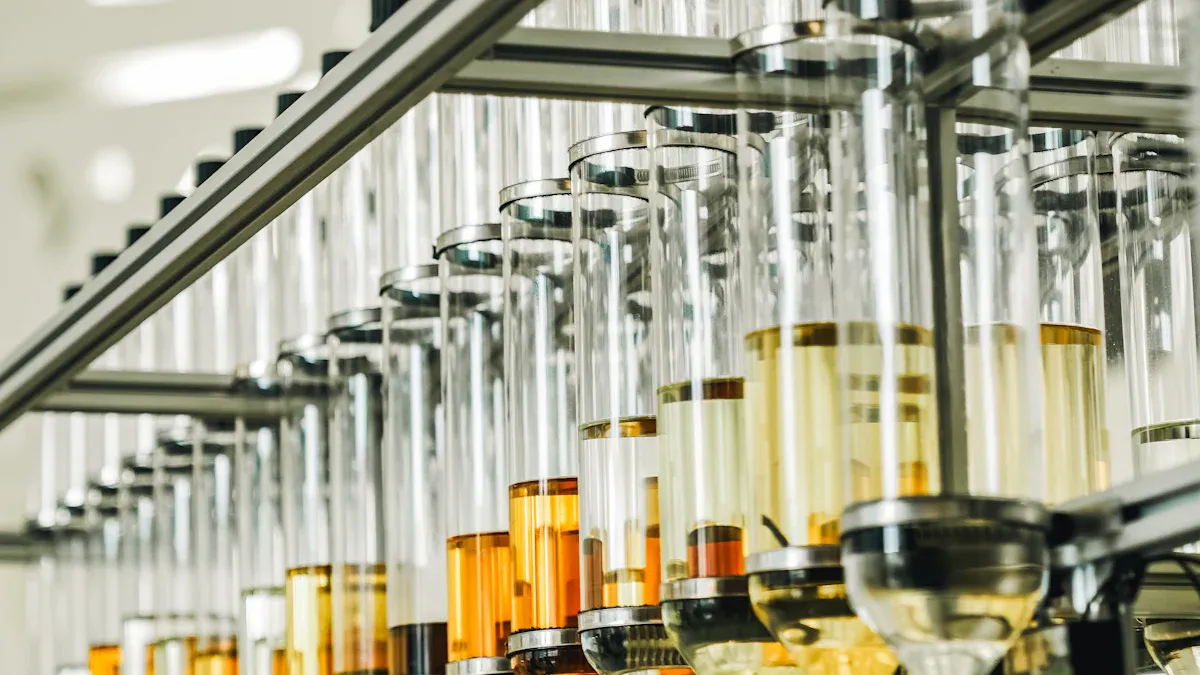
When you choose a bottle filling machine, you also need to think about the filling method. Each method works best for certain products and gives you different levels of accuracy. Here is a quick look at the main filling methods:
| Filling Method | Characteristics | Applications |
|---|---|---|
| Volumetric Filling | Dispenses a fixed volume, no matter the weight or density. | Creams, lotions, cosmetics, pharmaceuticals |
| Gravity Level Filling | Fills to a set level using gravity, so bottles look the same. | Dairy, juices, household products |
| Flow Meter Filling | Measures flow rate for each fill, adapts for accuracy. | Oils, juices, low-viscosity liquids |
| Net Weight Filling | Weighs each bottle during filling for high accuracy. | Oils, chemicals, high-value products |
Level Filling
Level filling, also called gravity level filling, fills each bottle to the same height. You get bottles that look uniform on the shelf. This method works well for thin liquids like milk, juice, or cleaning products. You should use level filling if you want a consistent look, even if the bottles have small size differences.
Flow Meter Filling
Flow meter filling uses sensors to measure how much liquid goes into each bottle. You can fill bottles quickly and with good accuracy. This method works best for low to medium viscosity liquids, such as oils or juices. Flow meter fillers are easy to use and help you avoid waste. They do not work as well with thick or chunky products.
Tip: Flow meter filling gives you fast speeds and saves product by stopping at the exact amount needed.
Volumetric Filling
Volumetric filling machines give each bottle the same volume of product. You get reliable results, even if the bottles or product density change. This method is great for creams, lotions, and other thick products. You often see volumetric filling in cosmetics, food, and pharmaceutical industries.
Volumetric filling keeps your product quality high.
You can use it for food, personal care, and e-liquids.
Weight Filling
Weight filling measures the product by weight as it fills each bottle. You get very high accuracy, which is important for expensive or thick products. This method is common for edible oils, sauces, and chemicals. If you need to meet strict weight rules, weight filling is the best choice.
| Filling Method | Accuracy | Best For |
|---|---|---|
| Weight Filling | High | High-viscosity or variable-density products |
| Flow Meter Filling | Medium to High | Low to medium viscosity, high-speed lines |
Weight filling helps you build trust with your customers by making sure every bottle has the right amount.
Specialized Machines
Inline Filling Machines
You will find inline filling machines in many modern factories. These machines fill bottles in a straight line, which helps you save space and keep your production area organized. Inline filling machines stand out because they offer high precision and flexibility. You can adjust them to fill different bottle sizes and shapes. If your business grows, you can add more fill heads or upgrade automation features.
| Feature | Description |
|---|---|
| Precision | Inline filling machines provide accurate volumetric fills, ensuring consistency in product filling. |
| Versatility | They can fill various container sizes and shapes, accommodating different product viscosities. |
| Upgradeable | Machines can be upgraded with additional fill heads or automation options to meet growing demands. |
| Integration | Designed to fit seamlessly into existing production lines, allowing for gradual automation. |
You will benefit from inline filling machines if you run a food business that fills sauces, oils, or dressings. Specialty chemical companies also use these machines because they need to change formulas often. If you have limited floor space, the linear design helps you fit the machine into tight areas. Inline filling machines work well for small and medium-sized businesses that want to grow without replacing their entire production line.
Tip: Inline filling machines let you start small and expand as your business grows.
Monobloc Filling Machines
Monobloc filling machines combine several steps into one compact system. You can fill, cap, and sometimes label bottles using a single machine. This design helps you save time and reduce errors. Monobloc machines work best when you need high speed and strict quality control.
| Industry | Production Challenges Addressed |
|---|---|
| Pharmaceutical Industry | Ensures precise and efficient handling of products, maintaining high quality standards. |
| Food and Beverage Industry | Streamlines production with fast and reliable automation for filling, capping, and packaging. |
| Cosmetics and Personal Care | Enhances productivity and ensures consistent product quality through integrated functions. |
| Chemical and Cleaning Solutions | Minimizes product wastage and ensures precise measurements in filling and labeling. |
| Automotive and Industrial | Meets specific requirements for efficient filling and capping of lubricants and oils. |
| Healthcare and Medical Devices | Meets high precision and sterility requirements for medical products. |
| Home Care Products | Ensures accurate measurements and consistent quality in production. |
| Nutraceuticals and Dietary Supplements | Enables precise dosage control and compliance with regulatory standards. |
| Pet Care Products | Maintains product quality and safety in filling and packaging processes. |
| Other Industries | Optimizes production efficiency across various sectors with versatile applications. |
You will see monobloc machines in industries that need fast, reliable, and precise filling. Pharmaceutical companies use them to meet strict standards. Food and beverage factories rely on them for speed and consistency. Cosmetic and chemical producers choose monobloc machines to keep product quality high and reduce waste. If you want to automate several steps and keep your production efficient, monobloc filling machines offer a smart solution.
Note: Monobloc machines help you meet industry standards and boost productivity with one integrated system.
Choosing the Right Machine
Product Type and Viscosity
You should always start by looking at your product’s viscosity. Thin liquids, like water or juice, work best with gravity fillers. Thick products, such as sauces or creams, need piston or pump fillers. If your product has small pieces or particulates, you must check if the machine can handle them. Different nozzles and machine types suit different viscosities.
Product viscosity helps you pick the right filling machine.
Gravity fillers suit thin liquids.
Piston fillers work for thick or chunky products.
Always check if your product contains particulates.
Tip: Assess the viscosity and texture of your product before choosing a machine. This step helps you avoid clogs and ensures smooth operation.
Production Speed and Budget
You need to match your machine to your production goals and budget. If you want to fill many bottles quickly, look for machines with higher automation. Automation reduces human error and increases speed and accuracy. Higher production rates often mean you need to invest more money upfront. Manual machines cost less but fill bottles slower. Fully automatic machines cost more but save time and labor.
Choose a machine that matches your production volume.
Automation improves speed and consistency.
Higher speeds usually require a bigger investment.
Comparison of Types
You can compare the main types of bottle filling machines by looking at speed, accuracy, maintenance, and versatility. The table below helps you see the differences:
| Feature | Gravity Fillers | Piston Fillers | Pump Fillers | Overflow Fillers | Vacuum Fillers | Net Weight Fillers |
|---|---|---|---|---|---|---|
| Speed | Moderate | Moderate | High | Moderate | Moderate | Moderate |
| Accuracy | Good | Excellent | Good | Excellent | Good | Excellent |
| Maintenance | Low | Moderate | Moderate | Low | Moderate | Moderate |
| Versatility | Medium | High | High | High | High | High |
Note: Think about your product, how fast you need to fill bottles, your budget, and how much maintenance you can handle. These factors help you choose the best machine for your needs.
You have many options when choosing a bottle filling machine. The table below shows the best uses for each type:
| Type of Filling Machine | Best Uses | Characteristics |
|---|---|---|
| Piston System | Shampoos, soaps, creams | Works well with thick liquids |
| Flow Meter System | Sparkling water, alcohol | Delivers high dosing accuracy |
| Pressure and Flow System | Low- to medium-density liquids | Not for thick creams or pastes |
Think about your product’s viscosity, how many bottles you need to fill, and your budget. These factors help you pick the right machine. You should also talk to industry experts. They can give you advice for your needs, suggest the latest models, and help you understand complex choices.
FAQ
What is the best bottle filling machine for thick liquids?
You should use a piston filler or a pump filler for thick liquids. These machines handle products like sauces, creams, and gels. They push the product into bottles with strong force, so you get a smooth and even fill.
How do I choose the right filling machine for my business?
Start by looking at your product’s thickness and how many bottles you need to fill each day. Think about your budget and space. You can ask a machine supplier for advice. They can help you find the best fit.
Can one machine fill different bottle sizes?
Yes, many machines let you adjust settings for different bottle sizes. Inline and pump fillers work well for this. You can change the fill volume and switch bottles quickly.
Tip: Always test your bottles with the machine before starting full production.
Do I need a fully automatic machine?
You need a fully automatic machine if you fill thousands of bottles each day. These machines save time and labor. For small batches, a manual or semi-automatic machine works well and costs less.
How do I keep my filling machine clean?
You should clean your machine after every use. Remove product parts and wash them with warm water and soap. Some machines have cleaning cycles. Keeping your machine clean helps you avoid clogs and keeps your products safe.