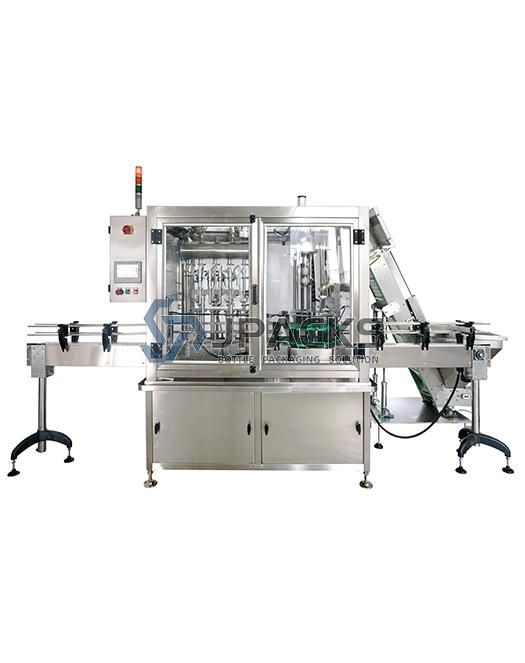




What is a monoblock filler?
 Aug 14, 2025|
 View:878
A monoblock filler is a specialized component used in various industrial applications, particularly in the construction and manufacturing sectors. This integrated filling system combines multiple functions into a single, compact unit, offering efficiency and space-saving advantages over traditional multi-component filling systems.
The term "monoblock" refers to the unitary construction of these fillers, where all necessary components are housed within a single block or housing. This design philosophy contrasts with modular systems where different functions are handled by separate components that must be assembled together.
Design and Construction
Monoblock fillers are engineered with precision to ensure reliable performance in demanding environments. The typical construction features:
Housing: Made from high-grade materials like stainless steel, aluminum alloys, or reinforced polymers depending on the application requirements.
Internal Mechanisms: Include precision valves, measuring chambers, and control systems all contained within the single housing.
Interface Points: Designed for easy connection to supply lines and receiving containers while maintaining the integrity of the monoblock concept.
Control Integration: Modern versions often incorporate electronic controls and sensors directly into the housing for seamless operation.
The compact nature of monoblock fillers makes them particularly valuable in space-constrained applications where traditional filling systems would be impractical.
Working Principle
The operation of a monoblock filler follows a carefully engineered sequence:
Product Intake: The material to be dispensed enters the filler through an integrated inlet port.
Measurement: Precise volumetric or gravimetric measurement occurs within the internal chambers.
Dispensing: The measured quantity is then transferred to the target container through the outlet mechanism.
Control Cycle: Electronic controls manage the timing and quantity of each filling operation.
This closed-loop system minimizes product loss and contamination while maximizing accuracy and repeatability.
Types of Monoblock Fillers
Various specialized versions exist to handle different materials and applications:
Liquid Monoblock Fillers: Designed for beverages, chemicals, or pharmaceutical liquids with viscosity-optimized designs.
Powder Monoblock Fillers: Handle dry products like flour, powdered milk, or cement with special anti-clogging features.
Paste Monoblock Fillers: For viscous materials like adhesives, food pastes, or cosmetic creams.
Aseptic Monoblock Fillers: Sterile versions for pharmaceutical and food applications requiring contamination-free operation.
Each type maintains the core monoblock philosophy while adapting to specific material characteristics.

Key Advantages
The monoblock design offers several significant benefits:
Space Efficiency: Eliminates the need for separate components spread across a production line.
Reduced Maintenance: Fewer connection points mean fewer potential failure points and easier servicing.
Improved Hygiene: The sealed design is easier to clean and sterilize, crucial for food and pharmaceutical applications.
Enhanced Accuracy: Integrated measurement systems provide more consistent filling quantities.
Energy Efficiency: Compact design reduces power requirements for operation and cleaning.
Quick Changeover: Many models allow rapid adaptation to different container sizes or products.
These advantages make monoblock fillers particularly attractive for modern automated production environments.
Industrial Applications
Monoblock fillers serve critical roles across multiple industries:
Food and Beverage: Bottling lines for drinks, dairy products, and packaged foods.
Pharmaceutical: Precise filling of medicines, vaccines, and medical solutions.
Cosmetics: Packaging of creams, lotions, and other personal care products.
Chemicals: Handling of industrial chemicals, cleaning products, and agricultural formulations.
Construction Materials: Dispensing of adhesives, sealants, and other building products.
The versatility of monoblock technology allows adaptation to nearly any filling requirement across these diverse sectors.
Technological Innovations
Recent advancements in monoblock filler technology include:
Smart Sensors: Integrated IoT-enabled sensors for real-time monitoring of fill levels, pressure, and temperature.
Self-Cleaning Systems: Automated CIP (Clean-in-Place) functionality built directly into the filler.
Adaptive Control: AI-driven systems that automatically adjust to varying product characteristics.
Modular Tooling: Quick-change systems that maintain monoblock integrity while allowing product flexibility.
Energy Recovery: Systems that capture and reuse energy during the filling cycle.
These innovations continue to expand the capabilities and efficiency of monoblock filling systems.
Selection Criteria
Choosing the appropriate monoblock filler requires consideration of several factors:
Product Characteristics: Viscosity, abrasiveness, temperature sensitivity, and other physical properties.
Production Volume: Required throughput rates and duty cycles.
Accuracy Requirements: Tolerance levels for filled quantities.
Cleanliness Standards: Sanitation needs based on industry regulations.
Container Types: Compatibility with bottles, pouches, cans, or other packaging formats.
Automation Level: Degree of integration with existing production line controls.
Proper evaluation of these factors ensures optimal selection for specific operational needs.
Installation and Maintenance
While monoblock fillers are designed for easier installation than multi-component systems, proper setup remains crucial:
Foundation Requirements: Vibration isolation and proper leveling for accurate operation.
Utility Connections: Proper hookup to electrical, pneumatic, or hydraulic power sources.
Calibration: Initial setup of measurement and control systems for the specific product.
Preventive Maintenance: Regular inspection and servicing of internal components.
Cleaning Protocols: Establishment of appropriate sanitation procedures between product runs.
Following manufacturer guidelines for installation and maintenance maximizes equipment lifespan and performance.
The monoblock filler represents an important evolution in industrial filling technology, offering compact, efficient, and reliable solutions for diverse packaging needs. By integrating multiple functions into a single, optimized unit, these systems provide significant advantages in accuracy, hygiene, and operational efficiency. As manufacturing continues to demand higher levels of automation and precision, monoblock fillers will play an increasingly vital role in production lines across numerous industries. Understanding their capabilities, proper selection criteria, and maintenance requirements enables businesses to fully leverage the benefits of this innovative filling technology.