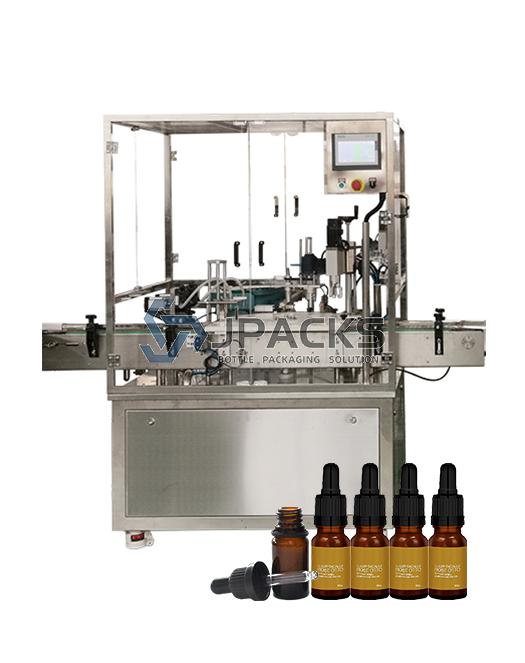




Guide to Oil Filling Machines: Packaging for Diverse Oil Types
 Nov 28, 2025|
 View:354
The packaging of oil products—ranging from edible oils like olive and sunflower oil to industrial lubricants and delicate essential oils—requires specialized equipment that ensures accuracy, efficiency, and product integrity. Overflow filling machines have emerged as a versatile solution for handling various oil types, particularly those requiring consistent fill levels regardless of container irregularities. This article explores the technology, applications, and key considerations for selecting the right filling equipment for different oil categories, with a focus on overflow filling systems and their alternatives.
1. Understanding Overflow Filling Technology
Overflow filling machines operate on a simple yet precise principle: they fill containers to a consistent level rather than a specific volume. This is achieved through specialized nozzles that create a seal around the container opening. As liquid enters the container, it rises until it reaches the overflow nozzle, at which point any excess product is diverted back to a holding tank. This process ensures uniform fill levels across all containers, which is especially important for products marketed in transparent packaging where visual consistency impacts consumer perception .
The key advantage of this system lies in its ability to compensate for variations in container internal volume while simultaneously handling foamy products effectively. As the liquid continuously flows into and out of the container until the foam subsides, it guarantees accurate filling even with challenging formulations . This makes overflow fillers particularly suitable for low to medium viscosity oils that may trap air during the filling process.

2. Oil Filling Machine Types by Application
2.1. Vegetable and Edible Oil Filling Machines
Vegetable oil filling machines are designed to handle various edible oils including soybean, sunflower, palm, olive, and corn oils. These machines typically employ piston filling technology for volumetric accuracy, with capabilities ranging from small bottles to large industrial containers. Automatic systems can fill between 2,000 to 18,000 bottles per hour depending on the number of filling heads (typically 2 to 16) and container size .
Modern edible oil filling machines feature PLC controls with touchscreen interfaces for precise operation and quick changeovers. They are constructed with food-grade stainless steel (SUS304 or SUS316) to meet hygiene standards and incorporate anti-drip nozzles to minimize waste . Many systems integrate filling with capping and labeling functions, creating complete packaging lines that handle everything from empty bottles to finished products .
2.2. Essential Oil Filling Equipment
Essential oil bottling equipment demands high precision due to the valuable nature of these products and typically small container sizes (from 5ml to 100ml). These machines often use peristaltic pump technology for accurate measurement, with filling accuracies reaching ±0.5‰ . This method prevents contamination since the product only contacts the tubing interior, making it ideal for aromatic compounds .
Automatic essential oil lines incorporate bottle unscramblers, filling stations, capping mechanisms, and labeling units in compact systems. They feature oxygen collection devices to minimize oxidation during filling, preserving the oil's therapeutic properties . Speeds range from 10 to 120 bottles per minute, with higher speeds achievable through increased nozzle counts (2 to 12 nozzles) .
2.3. Motor and Engine Oil Filling Systems
Lubricant oil filling machines are engineered for heavier viscosity products and larger container sizes, from small bottles to 200-liter drums. These robust systems utilize piston-based volumetric filling with accuracy within ±0.5% and outputs reaching 60 bottles per minute for smaller containers .
Industrial-grade systems for engine oil packaging feature heavy-duty construction with servo-driven motors and advanced control systems. For drum filling, fully automated lines can handle 40-60 drums per hour with precision weighing systems ensuring accuracy within 0.2% FS . These systems often include safety interlocks, automatic bung positioning, and palletizing integration for complete automation .
3. Key Technical Specifications and Selection Criteria
3.1. Machine Configuration Options
Oil filling machines are available in three primary configurations:
Manual Fillers: Basic, economical options suitable for small batches or specialty operations, requiring operator involvement for container positioning and activation .
Semi-Automatic Systems: Balance automation and cost-effectiveness, with operators handling container placement while the machine manages the filling cycle .
Fully Automatic Lines: High-speed systems with minimal operator intervention, featuring integrated conveyoring, automatic container handling, and PLC-based controls for maximum efficiency .
3.2. Critical Performance Parameters
When selecting an oil filling machine, consider these essential specifications:
Filling Accuracy: Ranges from ±0.1% for precision essential oil equipment to ±1% for general edible oil systems .
Production Capacity: Varies from a few bottles per minute for manual systems to over 100 bottles per minute for high-speed automatic lines .
Viscosity Range: Different pumping technologies accommodate various viscosities, from water-thin essential oils to thicker lubricants .
Container Adaptability: Equipment should accommodate the size and type of containers used, with quick-change tooling for different formats .
4. Advanced Features and Innovations
Modern oil filling machines incorporate several sophisticated features:
PLC Control Systems: Programmable Logic Controllers with touchscreen interfaces allow for recipe storage, parameter adjustment, and production monitoring .
"No Container, No Fill" Technology: Sensors prevent product waste by ensuring filling only occurs when containers are properly positioned .
Anti-Drip Nozzles: Specialized valves prevent product leakage after filling, maintaining cleanliness and reducing waste .
CIP (Clean-in-Place) Systems: Automated cleaning circuits enable efficient hygiene maintenance without disassembly .
Quick-Changeover Components: Tool-less adjustments minimize format change downtime, increasing production flexibility .

5. Specialized Applications by Oil Type
Different oil categories have unique requirements that influence equipment selection:
Edible Oils (Olive, Sunflower, Soybean, etc.):
Require food-grade materials (SUS304/316 stainless steel)
Often need nitrogen flushing to prevent oxidation
May incorporate heating systems for viscous oils in cold environments
Essential Oils (Lavender, Tea Tree, etc.):
Demand highest precision due to product value
Need oxygen-free environments to preserve aromatic compounds
Require compatibility with delicate glass dropper bottles
Industrial Oils (Motor, Engine, Lubricants):
Heavy-duty construction for high-volume production
Compatibility with various container types (plastic, glass, metal)
Often integrated with capping and labeling systems
6. Maintenance and Operational Considerations
Proper maintenance ensures long-term performance and hygiene compliance:
Regular Cleaning: Essential for edible oil applications to prevent rancidity and contamination .
Preventive Maintenance: Scheduled inspection of seals, pumps, and moving parts reduces unexpected downtime.
Operator Training: Comprehensive training ensures proper operation, changeover, and basic troubleshooting.
Quality Spare Parts: Maintaining an inventory of critical components minimizes production interruptions.
Most quality oil filling machines offer lifespans of 10+ years with proper maintenance, making them long-term investments that justify initial quality selections.
Selecting the appropriate oil filling machine requires careful consideration of product characteristics, production requirements, and packaging specifications. Overflow filling technology offers distinct advantages for oils requiring consistent fill levels, particularly those packaged in clear containers. Meanwhile, piston and peristaltic pump systems provide superior volumetric accuracy for valuable products like essential oils or viscous edible oils.
When investing in oil filling equipment, prioritize suppliers with industry-specific experience, comprehensive after-sales support, and the ability to provide customized solutions. The right machine not only enhances operational efficiency but also protects product quality and brand reputation through precise, consistent packaging results. By matching technology to application requirements, producers can achieve optimal performance across the diverse spectrum of oil packaging applications.