



Guide to Different Types of Liquid Filling Machines
 Sep 30, 2025|
 View:439
In the modern manufacturing landscape, liquid filling machines play an indispensable role in ensuring accurate, efficient, and hygienic packaging across numerous industries. From beverages and pharmaceuticals to cosmetics and chemicals, these machines streamline production processes while maintaining consistent product quality. The fundamental purpose of any liquid filling system is to dispense a precise amount of liquid into containers—whether bottles, jars, or pouches—reducing waste and optimizing operational efficiency. With technological advancements, today's market offers a diverse range of filling solutions tailored to specific product characteristics and production demands. This article explores the various types of liquid filling machines, their operating principles, and key selection criteria to help businesses make informed decisions.
Classification by Automation Level
The degree of automation in liquid filling machines directly correlates with production volume and operational complexity. Manual liquid filling machines represent the most basic option, requiring operators to fill containers individually using hand-operated pumps or levers. These systems are cost-effective and suitable for small batches or laboratory settings but suffer from low efficiency and inconsistent accuracy due to human involvement. They are ideal for startups or businesses with minimal production needs, such as sample preparation or niche product manufacturing.
Semi-automatic filling machines strike a balance between manual intervention and mechanization. Operators position containers and initiate the filling process, while the machine controls the dispensing volume digitally. These systems often feature pneumatic or electric pumps and are compatible with various container sizes. Offering moderate speed and improved accuracy, they serve small to medium-sized enterprises requiring higher throughput than manual systems can provide. Examples include benchtop piston fillers and overflow fillers handling 10–30 containers per minute.
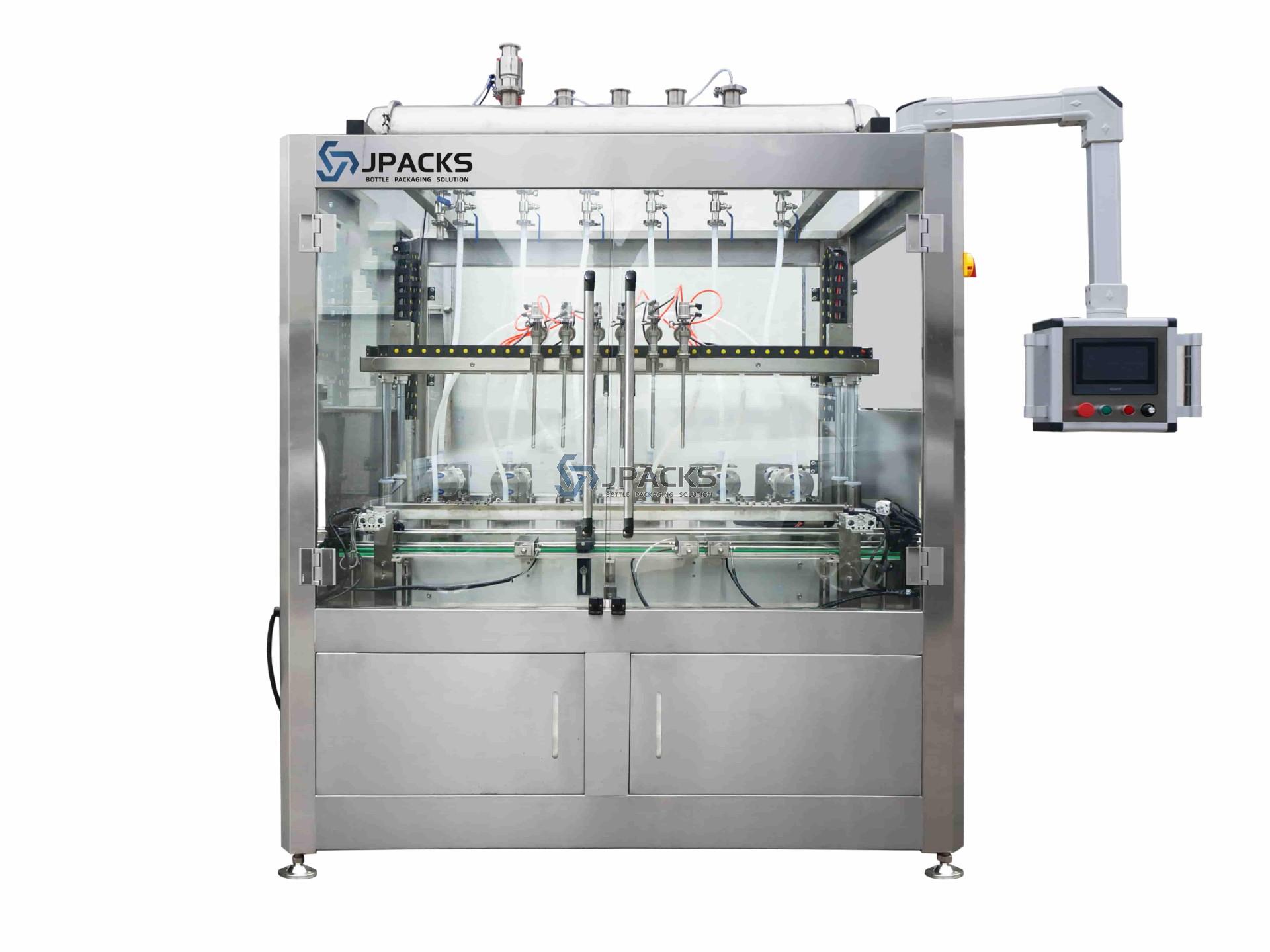
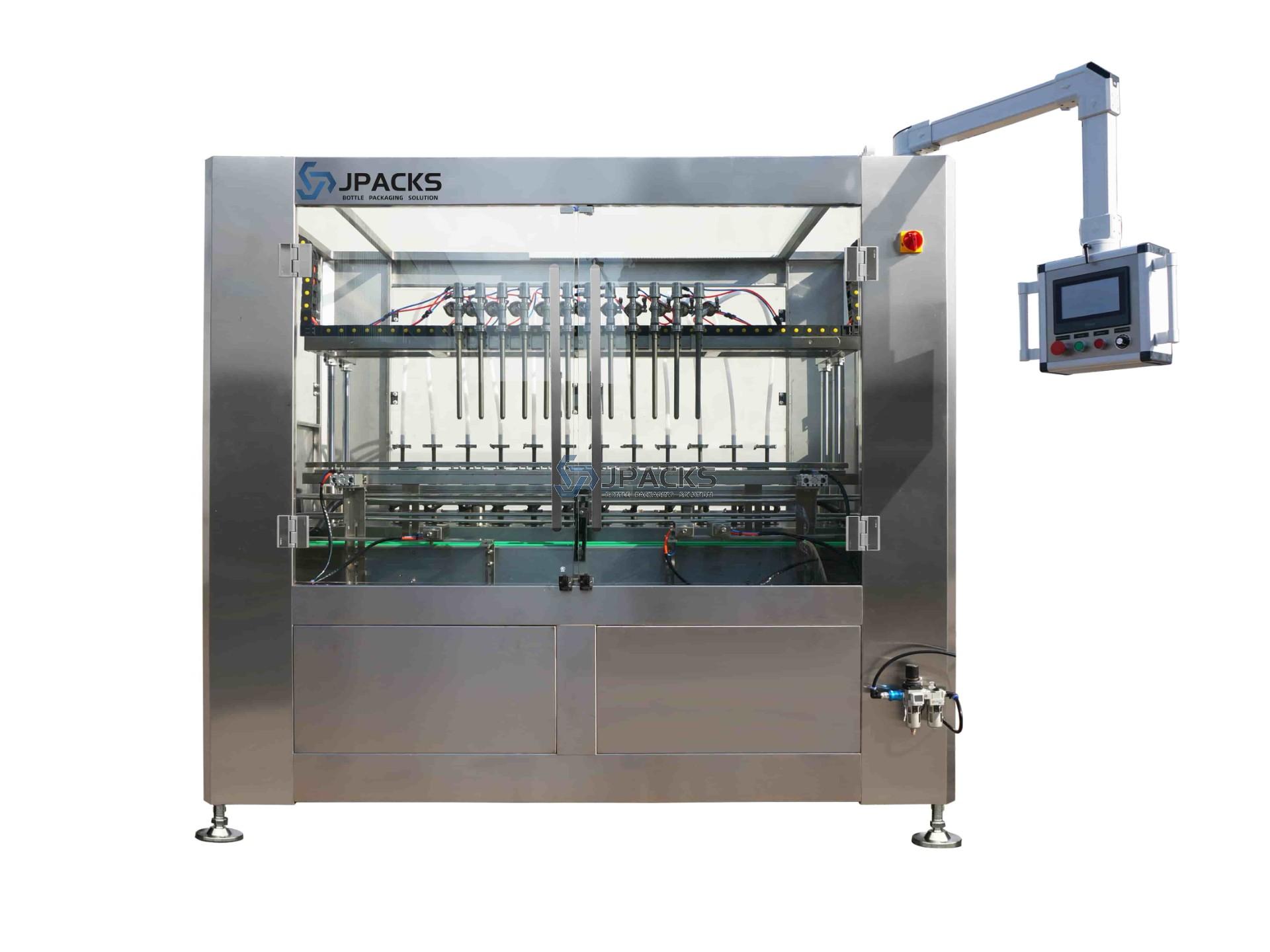
For large-scale production, fully automatic liquid filling machines deliver unparalleled efficiency. Integrated with programmable logic controllers (PLCs) and sensors, these systems automate the entire process—from container sorting and filling to capping and labeling. Capable of handling thousands of containers per hour with precision errors within ±1%, they minimize labor costs and maximize output. While requiring substantial investment and professional maintenance, they are indispensable in industries like beverages and pharmaceuticals, where high-speed, continuous production is essential.
Classification by Filling Principle
The physical principle used to measure and dispense liquid is a critical differentiator among filling machines. Gravity fillers rely on liquid weight to transport product from an elevated tank into containers below. Simple and cost-effective, they work best for free-flowing, low-viscosity liquids such as water, juice, and alcohol. However, they are less accurate for volatile or viscous products. Variations include timer-based (controlling flow duration) and constant-level (filling to a preset height) systems.
Piston fillers utilize a piston-cylinder mechanism to draw a precise volume of liquid and discharge it into containers. Highly accurate and versatile, they excel with viscous products like sauces, creams, and pastes. The fill volume is determined by the piston’s diameter and stroke length, which can be adjusted for different container sizes. These machines are available in manual to fully automatic configurations and are widely used in food, cosmetics, and pharmaceutical industries.
Vacuum fillers operate by creating a pressure differential—evacuating air from containers to draw liquid in. This method minimizes oxidation and volatilization, making it suitable for sensitive products like perfumes, essential oils, and pharmaceuticals. Their simple design ensures rapid filling and adaptability to varying viscosities, including oils and syrups. However, they may struggle with foamy liquids.
Pressure fillers employ external force (e.g., compressed air or pumps) to push liquid into containers. They are ideal for carbonated beverages (like soda and beer), where maintaining pressure prevents gas escape, and for thick products like lubricants or syrups. Subcategories include isobaric fillers (equalizing pressure between supply and container) and differential pressure fillers (using higher pressure to accelerate flow).
Net weight fillers prioritize precision by weighing containers during filling. Load cells monitor mass in real-time, stopping flow once the target weight is reached. This approach minimizes overfills and underfills, reducing product giveaway. Especially valuable for high-value or regulated substances (e.g., pharmaceuticals and chemicals), these systems accommodate diverse container shapes and liquid densities.
Overflow fillers ensure uniform fill levels visually rather than metering by volume or weight. Liquid circulates until it reaches an overflow port, returning excess to the reservoir. This guarantees consistent appearance in transparent bottles—critical for cosmetics and personal care products. They perform best with low- to medium-viscosity, non-foamy liquids.

Specialized Filling Machines for Unique Needs
Certain liquids demand specialized equipment due to unique physical or safety requirements. Aseptic liquid filling machines maintain sterile conditions throughout the process, filling pre-sterilized containers in a controlled environment. They are essential for pharmaceuticals and perishable foods, ensuring shelf stability without refrigeration. Using advanced sterilization techniques (e.g., steam or chemical sanitization), they prevent contamination and extend product life.
Molten fillers handle products that require heating to remain liquid, such as waxes, balms, or chocolate. These machines feature heated hoppers and temperature controls to maintain optimal viscosity during dispensing. Often portable, they suit small-batch production of cosmetics and food items. The filling mechanism typically involves pistons or gravity systems adapted for thermal management.
Peristaltic fillers use rotating rollers to compress flexible tubing, pushing liquid through without contact between the product and machine parts. This makes them ideal for sterile applications (e.g., biotech and pharmaceuticals) as tubes can be easily replaced or sterilized. They offer high accuracy for low- to medium-viscosity fluids and minimize cross-contamination risks.
Positive displacement pump fillers rely on gear or lobe pumps to meter liquid based on shaft rotations. Effective across a wide viscosity range—from thin solvents to thick pastes—they provide consistent dosing and are less affected by pressure fluctuations. Common in chemical and food industries, they can handle particulates without clogging.
Key Selection Criteria
Choosing the right filling machine requires a thorough analysis of product and operational factors. Liquid properties are paramount: viscosity determines the suitable mechanism—gravity fillers for watery liquids, piston/pump fillers for viscous ones. Volatility and foaming tendency may necessitate vacuum or pressure systems, while corrosiveness dictates material compatibility (e.g., stainless steel for acids) .
Production volume influences automation choices. Low-volume scenarios (e.g., under 500 bottles/hour) may justify manual or semi-automatic machines, whereas high-volume lines (thousands per hour) require fully automatic systems. Throughput requirements also affect configuration: linear fillers for flexibility and rotary fillers for speed .
Accuracy needs vary by industry; pharmaceuticals and cosmetics demand tight tolerances (often ±0.5%), achievable with piston or flowmeter fillers. For less critical applications, gravity or overflow fillers suffice. Container characteristics—such as size, shape, and material—also matter. Transparent bottles benefit from overflow fillers, while flexible pouches may need specialized sealers .
Hygiene standards are non-negotiable in food and pharmaceuticals. Machines must feature easy-clean designs, CIP (Clean-In-Place) systems, and compliance with GMP/FDA regulations. Additionally, consider future scalability; modular machines allow upgrades as business grows. Finally, evaluate suppliers’ reputation, after-sales support, and customization options to ensure long-term reliability.
Liquid filling machines are pivotal in modern manufacturing, balancing speed, precision, and adaptability. Whether leveraging gravity for simple fluids or employing advanced aseptic techniques for sensitive pharmaceuticals, each type addresses specific production challenges. Understanding the interplay between liquid properties, automation levels, and filling principles enables businesses to select optimal equipment. As technology evolves, trends like smart sensors and IoT integration will further enhance efficiency. By aligning machine capabilities with operational goals, companies can achieve sustainable growth, reduce waste, and maintain competitive advantage in dynamic markets.