



The Filling Line Process: An Overview
 Jul 31, 2025|
 View:1036
Beyond Simple Filling: The Demands of the Modern Market
The static filling lines of the past no longer suffice. Modern manufacturing faces unprecedented challenges:
SKU Proliferation & Shorter Runs: Consumers crave variety, leading to an explosion of product formulations, flavors, bottle shapes, and sizes. Lines must change over faster and handle smaller batches efficiently.
Uncompromising Quality & Safety: Regulatory bodies (FDA, EMA, USDA, etc.) demand stringent controls, especially in pharma and food. Traceability, contamination prevention, and absolute fill volume accuracy are non-negotiable.
Sustainability Imperative: Reducing water and energy consumption, minimizing product waste, and optimizing packaging materials are environmental and economic necessities.
Cost Pressures & Efficiency Gains: Continuous OEE (Overall Equipment Effectiveness) improvement through minimized downtime, higher speeds, and reduced labor is vital for competitiveness.
Supply Chain Resilience: Flexibility to adapt to shifting material availability and logistical constraints is crucial.
These pressures necessitate a leap forward in liquid filling line design and operation.

Core Components: Where Precision Meets Innovation
Modern lines integrate several optimized elements:
Unscrambling & Feeding:
High-Speed Vision Systems: Advanced cameras precisely identify bottle orientation and reject malformed containers at high speed, preventing jams downstream.
Gentle Handling: Customized starwheels, magnetic escapements, and servo-driven conveyors ensure delicate bottles (e.g., glass, thin-walled PET) are positioned accurately without damage.
Quick-Change Tooling: Standardized interfaces and automated adjustments minimize changeover times between different container types.
Cleaning & Sterilization:
Automated CIP/SIP: Clean-in-Place (CIP) and Sterilize-in-Place (SIP) systems are integral, programmable, and validated. Advanced spray balls, optimized chemistry dosing, and precise temperature control ensure rigorous hygiene standards with reduced water/chemical usage.
Hygienic Design: Seamless surfaces, sloped frames, and minimized dead legs to prevent contamination build-up. Materials like 316L stainless steel dominate pharma and food-grade applications.
Isolator Technologies (Pharma): For highly potent or sterile products, filling zones are enclosed in isolators with RTP (Rapid Transfer Ports) to maintain critical environments.
The Heart: Filling Technology Evolution
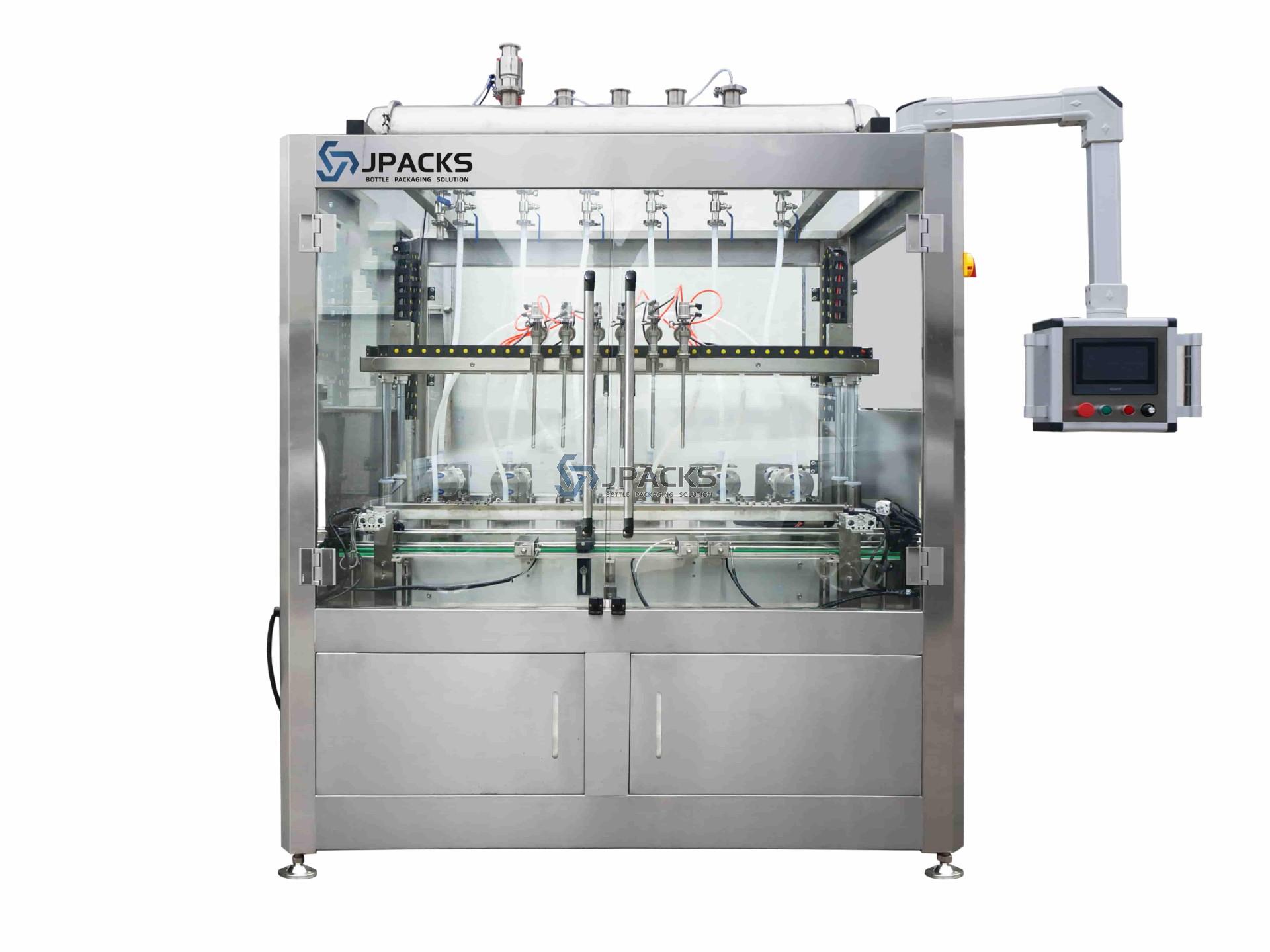
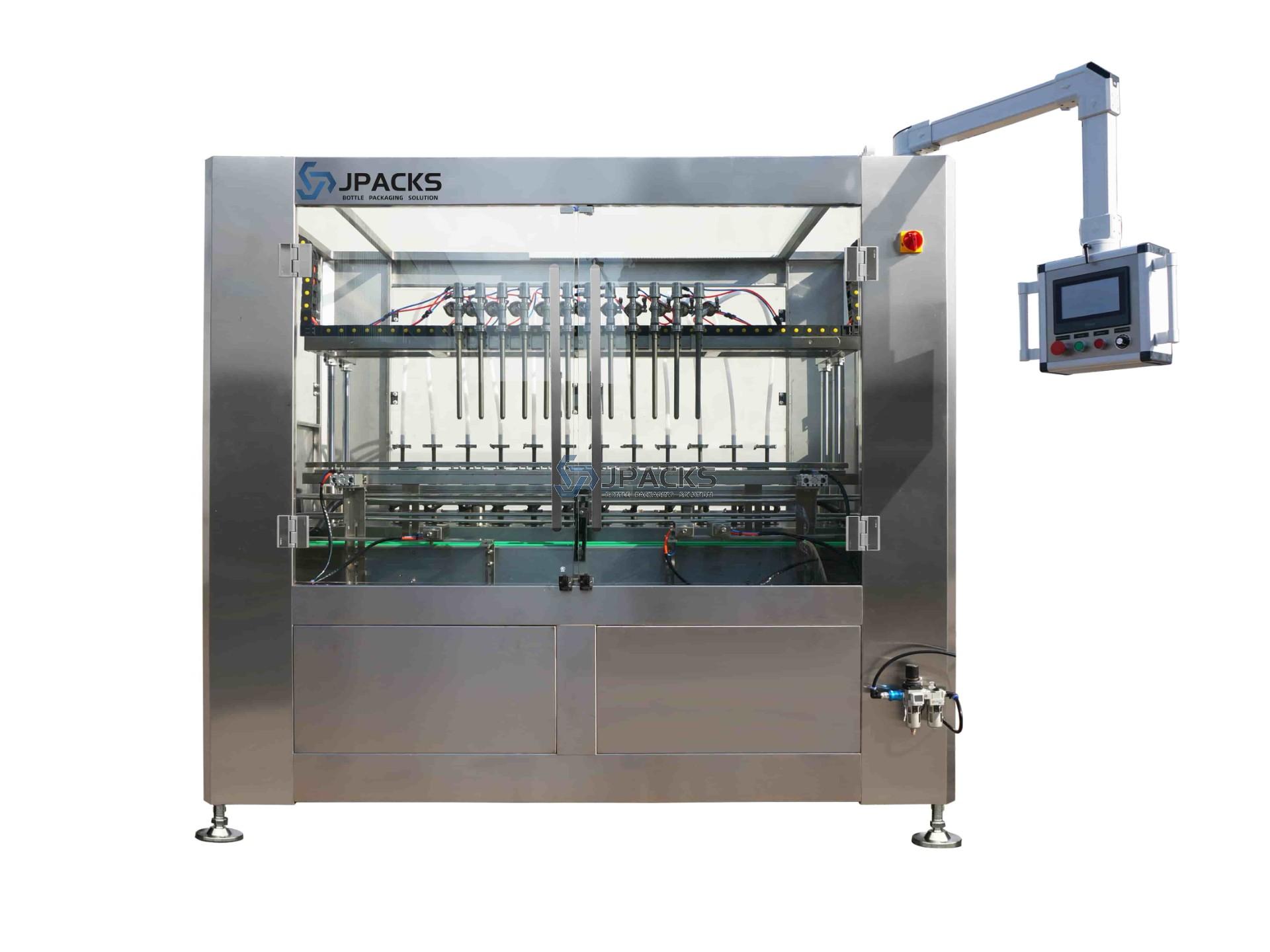
Precision Dosing: Modern fillers leverage micro-processor controlled mass flow meters (MFMs) and Coriolis flow meters for volumetric filling, offering unparalleled accuracy (±0.25% or better), especially for viscous products or foamy liquids. Servo-driven piston fillers maintain high precision for high-viscosity pastes and creams.
Non-Contact Filling: Overflow fillers remain optimal for achieving consistent fill levels in clear containers, enhanced by level sensors for closed-loop control. Gravity filling gets smarter with precise valve control.
Anti-Foam & Splash Control: Sophisticated nozzle designs (e.g., spring-loaded bottom-up, snorkel tubes) minimize product aeration, foaming, and splashing during high-speed filling.
Liquid Product Handling: Temperature-controlled reservoirs and product paths, gentle agitation systems, and inert gas purging (N2, CO2) maintain product integrity.
Valve Technology: Pneumatic valves are faster, but sanitary solenoid valves are gaining traction for precise control and simplified CIP. Quick-disconnect assemblies expedite cleaning and maintenance.
Capping & Sealing:
Torque Control Evolution: Servo-driven cappers deliver precise, programmable torque application with real-time monitoring and data logging for quality assurance. Automatic torque compensation handles container variations.
Versatility: Machines handle diverse closures – screw caps, ROPP (Roll-On Pilfer Proof), press-on, snap caps, corks, induction seals – often integrating vision for cap presence, orientation, and seal integrity checks.
Advanced Sealing: Precise application of induction liners and tamper-evident bands is standard.
Labeling & Coding:
Print & Apply: High-resolution CIJ (Continuous Inkjet), TTO (Thermal Transfer Overprint), and laser coders provide clear, indelible batch codes, expiry dates, and barcodes directly onto containers or labels. Vision systems verify print quality and accuracy.
Smart Labeling: RFID tag integration during labeling is rising for enhanced traceability. Variable data printing supports serialization and customer-specific promotions.


The Control & Intelligence Layer: Brains Behind the Operation
The true revolution lies in the integration and intelligence layer:
Industry 4.0 / IIoT Integration: Modern lines are networks of smart machines communicating via OPC UA, Ethernet/IP, or Profinet. Sensors monitor every critical parameter (pressure, temperature, flow, torque, position, motor current).
SCADA & MES Connectivity: Real-time data flows into centralized Supervisory Control and Data Acquisition (SCADA) systems and Manufacturing Execution Systems (MES). This provides:
Real-time OEE Dashboards: Instant visibility into availability, performance, and quality metrics. Downtime tracking with root cause analysis.
Predictive Maintenance: AI and ML algorithms analyze sensor data (vibration, temperature, power consumption) to predict component failures (pump wear, bearing issues) before they cause unplanned downtime.
Recipe Management: Stores validated machine settings (speeds, fill volumes, torque settings, CIP parameters) for every product/pack combination, enabling one-touch changeovers.
Complete Traceability: Aggregating data from coding stations, vision systems, and machine logs creates a complete digital batch record for every unit produced, meeting serialization requirements (e.g., DSCSA in Pharma, FSMA 204 in US Food).
Energy & Resource Monitoring: Tracking utilities (water, compressed air, electricity, steam) to identify waste and optimize consumption.
Vision Inspection Systems: Omnipresent for QA:
Pre-Fill: Container inspection (cracks, contamination, correct type).
Post-Fill: Fill level verification (laser or camera-based), closure presence/application, label position/accuracy, print quality, seal integrity checks.
Advanced Systems: Capable of detecting micro-contaminants, subtle label defects, and color matching.
Digital Twins: Virtual replicas of the physical line are used for simulation, optimization, operator training, and testing new configurations/recipes offline, reducing risk during implementation.
The liquid filling line has evolved from a collection of mechanical components into an intelligent, interconnected production system. Today's leaders prioritize precision, flexibility, data-driven intelligence, and sustainability. Investing in a modern liquid filling line is no longer just about meeting current capacity; it's about building a resilient, adaptable, and efficient manufacturing asset capable of navigating the complexities of today's market and poised to embrace the innovations of tomorrow. The revolution is ongoing, driven by the relentless pursuit of higher quality, lower costs, reduced environmental impact, and the agility to deliver exactly what the consumer wants, when they want it. Success belongs to those who embrace and invest in this liquid lifeline's continuous modernization.